Why families stop speaking, and how some find their way back
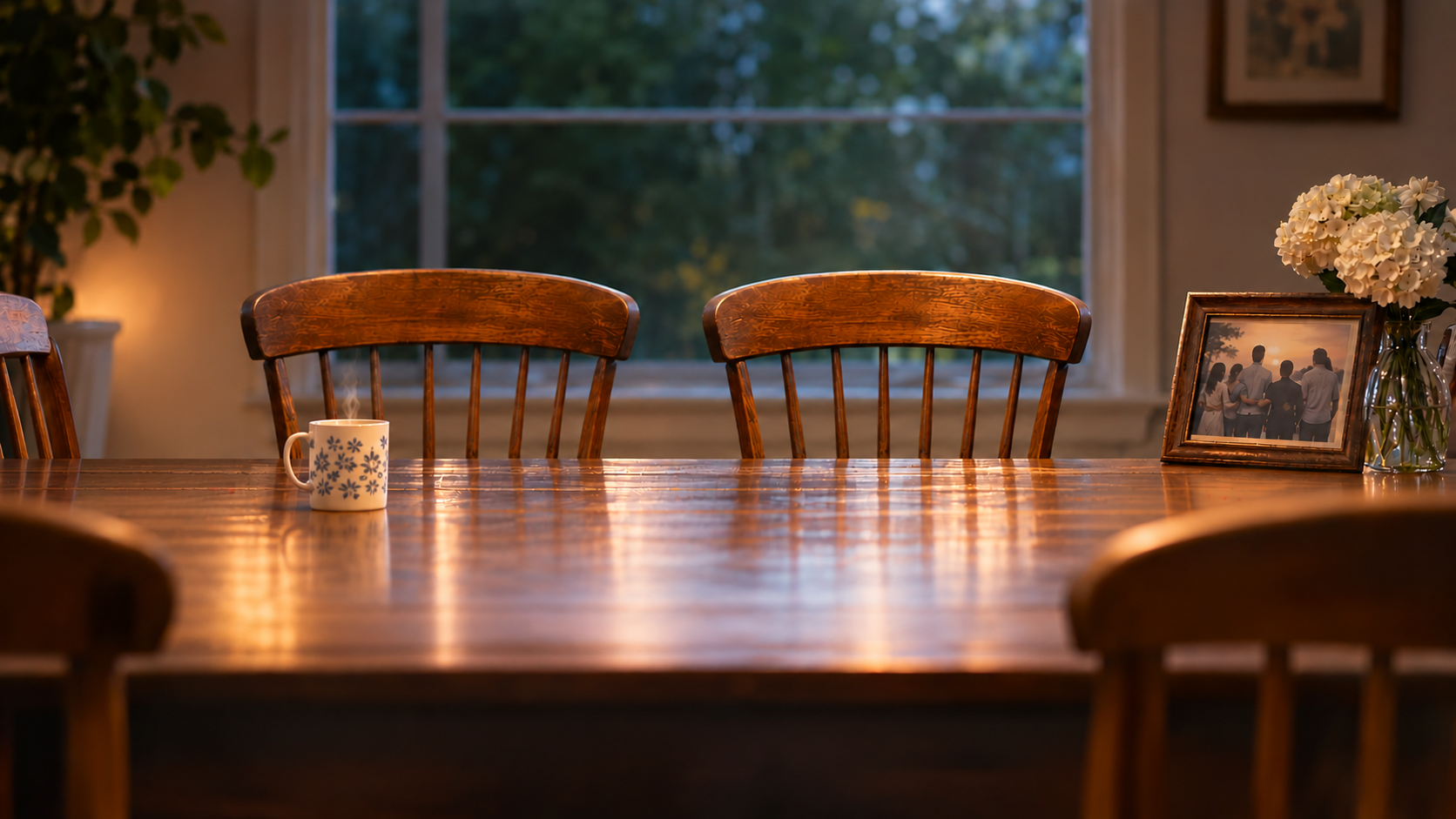
Estrangement rarely announces itself. It shows up as a birthday that passes without a call, a Christmas arranged around an empty chair, a grandchild growing up with a grandparent they've never met. Families have always had rifts, and what's changed is how openly we now talk about walking away from each other.
Two stories about the same empty chair
The two sides of an estrangement almost always tell different stories. The adult child talks about hurt that was never acknowledged, a pattern that repeated for years, and distance as the only thing that's ever felt like protection. The parent talks about a child who disappeared without a clear explanation, and often looks for the cause outside the relationship, in a divorce, a new partner, or the child's therapy. Each story is usually true from where that person is standing, and neither is the whole picture. If you're living one side of this, the other side's version probably sounds unfair, and it may help to know it sounds that way to both of you.
Both responses make sense. For an adult child who's tried to be heard and felt dismissed, stepping back is a way of finally being taken seriously, even when the cost is high. For a parent, the confusion is real, and so is the sentence we reach for, that we did our best. Very often we did, with what we'd been given, because most of us raise children with the tools our own parents handed us. That's legacy, the patterns that come down a family without anyone choosing them, and it sits underneath far more estrangements than either side can see in the moment.
When money gives an old question a shape
In families with a business or an estate, the break often shows up around money. An inheritance, a role in the company, or the arrival of a new partner who doesn't fit can look like the cause. More often it's where a much older rift finally becomes visible, because money gives an old question a concrete form, who was valued, who was trusted, and who was always going to come second.
Estrangement is rarely only between two people. Siblings get pulled into choosing a side, grandparents lose grandchildren, and partners end up holding a loyalty that was never theirs. The whole family rearranges itself around the absence, and everyone learns not to mention a name.
What helps a door open again
Not every estrangement should end in reconciliation. Sometimes distance is the healthiest decision a person can make, and the work is helping a family accept that with as little damage as possible. Many estrangements do soften with time, though, and when they do, it's often because one side feels their experience has been acknowledged without having to win the argument about whose fault it was. That kind of acknowledgement asks a lot of a family, and it tends to mean more than any apology written to settle the matter.